
In the last few weeks we have witnessed the 70th anniversary of the D-Day invasions and seen a concerted push to finally achieve reconciliation between those who fought in those grim days. There can be no doubt that the freedoms we enjoy now are a direct result of the bravery of those who spearheaded the invasion of France from Britain to expel the Nazi’s. But, for me the most touching part of the ceremony on the actual day was the greetings exchanged between the surviving veterans and Angela Merkel. A fitting finality perhaps? Lets all pray for the peace that those who fought in the great wars would wish. However, to my story…
When I was a child it was the standard question that every Father dreaded. Boys didn’t ask Mum ‘What did you do in the war’ because frontline service for females just didn’t happen – though many served as nurses and some fought in the espionage arena, often with tragic consequences. I have no documentary evidence but I understand from my Mother that she worked as a volunteer in the Ambulance Service in London during the blitz. My Father’s story is easier to tell as I have documents along with my memories of his answer to that question. So Dad, What did you do in the war?
Well, I can tell you that my Father never fired a shot in anger. He never directly faced any of this country’s enemies throughout the Second World War. As a young man he would rightly have expected to be called up in 1940 when Britain was mobilising its populace in response to the Dunkerque disaster. The Army, Navy or RAF were all clamouring for men. Dad told me that he tried to enlist but was turned away and that at the time he didn’t immediately understand why.
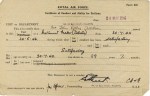
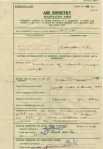
The reason is evidenced in the documents reproduced below. He was a skilled craftsman – an instrument fitter with knowledge of gyroscopes. The RAF wanted him as a Civilian Employee! He was attached to number 22 Maintenance Unit at Silloth but his work required him to share his skills with untrained RAF personnel and I understand that he moved from one airfield to another until he finished the war at Kemble – an airfield I’ve had the pleasure of flying into something like 20 years after he passed on and would have liked to have had the opportunity to take him there.
His work as he told me was to calibrate the flying instruments on a variety of types of aircraft but principly bombers such as the Stirling and Lancaster – he remembered that the view from the cockpit of a Stirling was a very long way down and you wouldn’t want to fall out. He also worked in Anson’s and Mosquito’s. Not only did he calibrate instruments but he was also involved in the fitting and maintenance of oxygen supplies – another skill to pass on.
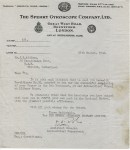
What he didn’t tell me is that he was trained in the maintenance of the Sperry O-1 bombsight – not as well known as the Norden sight but probably better and that (reading between the lines) he was also trained on the superior Sperry S-1 bombsight. Have a look at the letter from Sperry and the cryptic S/1 in the reference on the left. At the time that was top-secret and it’s probable that the covering letter carefully disguised the real training in 1942 behind an existing bombsight that dated back to the 1930’s – I can’t ask Dad now because he isn’t here and he was dead before the Official Secret’s position on this expired.
So my Dad did nothing exciting in the war but I wonder how much his work as a Civilian helped some of those pilots to press home their attacks and to come home safely? As for Mum, I dread to think what she went through with the ambulances in the Blitz and I’m not surprised that she never told me anything about it – some things are best left in the past.


 2e0mca.uk
Leave a reply to Su Leslie Cancel reply