
Most hobbies have a language that, whilst obscure to the outsider, creates instant recognition to the enthusiast. And whilst some nicknames cross into the public domain – everyone knows that a Chevvy is a Chevrolet! – the vast majority will never be known to the outside world. Were I to mention an Inverted Jenny, most people would scratch their heads or look around for a young lady doing hand-stands. It is actually a reference to a famous US mis-print that is highly valued by stamp collectors. Of course, everyone has heard of the Penny Black because the nickname was in the public domain from the instant that it was replaced by the Penny Red stamp. Aviation has its share of nicknames too – Hooter for the F-104 Starfighter, Huey for the Iroquois Helicopter and Frightening for the English Electric Lightning. Oh, and I should mention that when told by Norwich control tower to “park next to the Shed”, I didn’t ask which one. I dumped our Cherokee next to the Short’s 330 😉
The message from the preceding paragraph is clear – if the thing doesn’t have an official name, enthusiasts will give it one! And sometimes they will give it one anyway if the official version is cumbersome or lacking relevance. On the LMS railway the Royal Scots were Royal Scots but the Coronation Scots became Duchesses – most of the class were named after real life duchesses. Shunting locomotives from the LMS invariably became ‘Jinties’ to the enthusiast though the nickname appears to have originated with a small class of 0-4-0 saddle tank locos built for the breweries in Burton-on-Trent. It’s probable that the Thomas the Tank Engine stories played their part in this widely used epiphet – Jinty was identifiably an LMS 3F in the books. The LNER used designations like A1, J36, Z4! Small wonder that the enthusiasts christened the streamlined A4’s Streaks – though other nicknames seem to have been rare.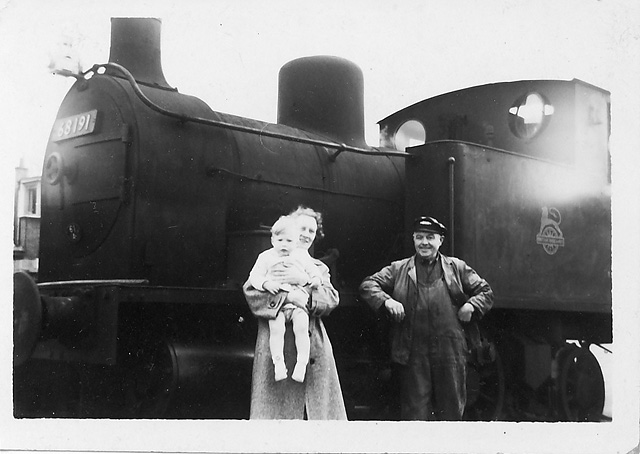
When diesels arrived in numbers on the railways of Britain they initially had uninspiring designations too. Invariably, nicknames were applied although some have changed over time. The English Electric Type 1’s which became Class 20’s are Choppers – a reference to the engine under load sounding a bit like helicopter blades. Their Type 4 cousins, the Class 40’s were known as Whistlers (whistling when idling) whilst the Type 5’s were the Deltic’s – a clear reference to the Napier Deltic engines inside these locomotives. The type 3’s from the same manufacturer became Class 37. They have a couple of names – Growlers and Tractors – both references to their engine note. The Class 50’s became Hoover’s because of the sound of their cooling equipment (it beats as it sweeps…) and they retained the name after the modifications removed the source of the sound.
The BR Sulzer Type 2’s – Class 25 – became Rats because they could be found just about anywhere! The Sulzer Type 4’s – Classes 44, 45 & 46 – became generically know as Peaks, though only the 10 Class 44’s were actually named after English and Welsh mountains. The lowly shunter was not ignored either – the ubiquitous Class 08 usually known as a Gronk; a reference to the clanging sounds heard when changing direction perhaps (sometimes the origins of nicknames can be a bit obscure!). I’ve heard Class 31’s being referred to as Brians – don’t ask me, I have no idea about that one!!!
Modern locomotives also get monikers. The commonest type currently in service is the Class 66 which, along with its predecessor Class 59, is known as a Shed because the shape of the roofline resembles that of the garden shed. They are also called Yings because of the engine sound and by association, the 59’s are Daddy Yings – being older and slightly more powerful 🙂 The Class 70’s have become Frugly Betty’s – Freightliner owned and a reference to a popular TV sitcom. The designer seems to have had an off day with that locomotive!


 2e0mca.uk
Leave a reply to Patti Kuche Cancel reply