

Now this is an interesting one. Nostalgia is something that we can actually engage with in the present and today I’ve done just that as we shall see.
Nostalgia is about history – Sometimes our own and sometimes in a broader sense. Much of my history is tied to my love of trains but also my time working for BT. After doing my apprenticeship I maintained Telephone Exchange equipment at Lords…
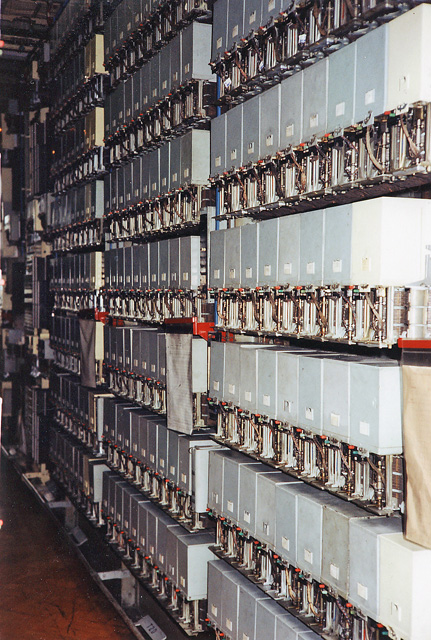
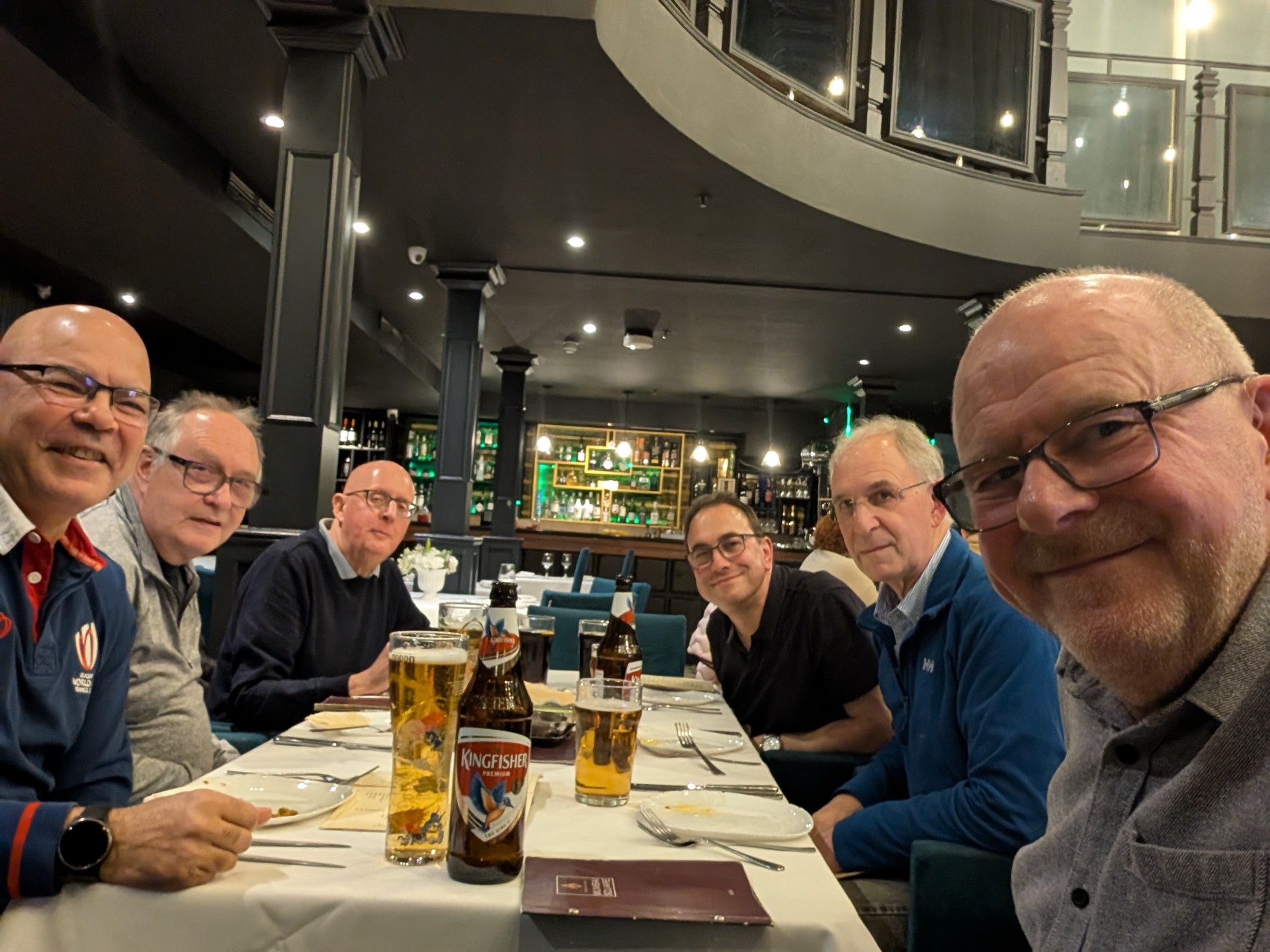
…It was a generally happy time and it speaks volumes that several of us ex-Lords engineers still meet up at Christmas to have a beer and reminisce. Technology moves at pace – It started with the introduction of electronic exchanges, high-speed datalinks and mobile technologies. I changed jobs many times within the company as we kept pace with technology. Ultimately, I became an application programmer in a small team looking after a very important piece of the company’s background software. Retired now for seven years, I still hook up with that team a couple of times each year – 6 of us made it to this years Christmas Curry…
Trains – It’s easy to reminisce about this though I have to be careful because it’s all too easy to actually get drawn into a general history rather than my own within the hobby. Fortunately, as a result of today’s outing I can speak about a very specific set of personal memories and as such keep to my own nostalgia without stepping too much into the history although some is necessary to fill in details that will become important in the end.
The first Diesel locomotive I can recall seeing was an English Electric Type 1. It was at Hadley Woods where I had been taken for a picnic by my parents. I would guess I was about 4 years old at the time and that would make it 1960 when almost everything was still steam hauled. I now know that the loco I saw was probably based at Devons Road – an ex-North London Railway depot that was rebuilt by the LMS after being damaged in WWII and then converted into the UK’s first dedicated diesel maintenance depot by British Railways in 1958. A mix of Type 1 diesels were based there to handle local London trip freights. I could go on at length about the history of UK Dieselisation but suffice to say – with wagon load freight in rapid decline, Devons Road depot had a short life and closed in 1964. Its Type 1 fleet were dispersed and in many cases went to the scrap yard at a very young age. Only the English Electric Type 1’s with their exceptional reliability found themselves working elsewhere long-term. You can still find Devons Road on the map – It’s a station on the Docklands Light Railway a short distance southwest of Stratford.
The English Electric Type 1’s became Class 20 under the renumbering scheme. By the early 1970’s when I was first able to go trainspotting Class 20’s were a very rare sight in London, having gravitated to the industrial regions of the Midlands, Yorkshire and Scotland where their light axle loading was valued on lines where mining subsidence was a concern. I eventually caught up with all the Class during my original period as a trainspotter. Some of the hardest to get were the ones based in Scotland. In fact, the last one I needed was out of service and awaiting scrapping in St Rollox works, Glasgow. That resulted in me doing a little trespass and having a discussion with a Security Guard and his Land-Shark. He could tell I wasn’t there to steal anything and sent me on my way after I’d shown him the hole in the fence 😅 Most of the other Scottish Class 20’s were caught during official visits to Depots. Here is a line of them at Thornton in November 1980…

…With 20205 at the front.
When Devons Road closed, the remaining work that its locomotives had handled passed to Stratford depot where a mixed fleet of Class 31’s and Class 37’s were based. The 37’s were often tasked with running the Cambridge services out of Liverpool Street. But they also handled a lot of freight traffic around London. Here’s 37004 with a Nuclear Flask train passing through Stratford in 1982…

…Probably on its way to Cricklewood yard from Sizewell for onward transit to Sellafield. I also saw all the Class 37’s back in the day although they were easier to track down than the Scottish 20’s 😅
Today’s Stratford is almost unrecognisable compared to that shot from over 40 years ago. But let’s not worry about that as today’s nostalgia trip was about catching up with a bit of the past in the present under cover of winter darkness. There was a charter train booked for heritage traction being run today from Great Yarmouth in a big loop round via Harwich and Stratford to Peterborough! Having checked that it was running – they can and do get cancelled – I made my way to Stratford to await my opportunity to capture the event.
Here it is with the Class 20’s leading. That’s our friend from Thornton, 20205 at the head of the train…

…and behind is 20007 – Originally delivered to Devons Road in 1958 and returning to its old stomping ground. Bringing up the rear was 37407 ‘Blackpool Tower’…

…Originally delivered to Ebbw Junction to work the South Wales coal and steel traffic, so not a Stratford loco but a good representative of the type still at work.
Of 228 Class 20’s built, 49 still exist whilst of the 309 Class 37’s 94 remain. At the last count, 6 Class 20’s are still in service while 66 Class 37’s are still earning a living. The other survivors of these classes are preserved in various states of repair.


 2e0mca.uk
Leave a comment