
David Attenborough (now Sir) once introduced Hoverflies as superb aeronauts. That, they most certainly are with the ability to hover motionless in a pool of sunlight and yet to dart off in pursuit of a rival in such a sudden manner that you wonder if the behaviour of alien spacecraft in the X-Files or Close Encounters are modelled on them! They mimic bees and Wasps in their black and gold colouration as a defence against predators. Here are a few that I have photographed in the last couple of weeks at Long Lane Pasture. Sometimes they do take a rest stop which helps 😉
Helophilus pendulus on a cultivated Geranium…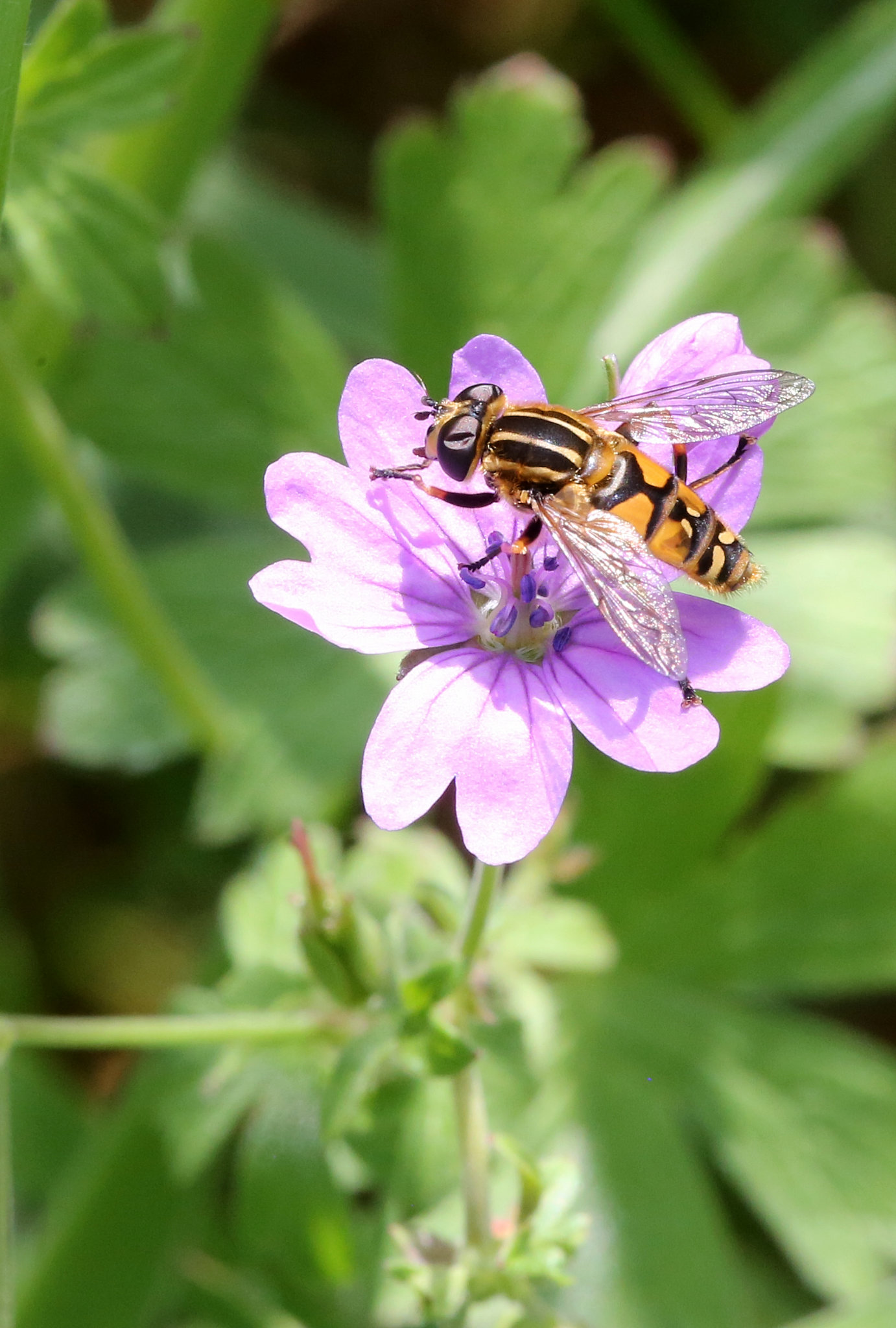 …The longitudinal stripes on the thorax are quite distinctive! Reputedly this is our commonest Hoverfly.
Myanthropa florea resting on a Convolvulus leaf…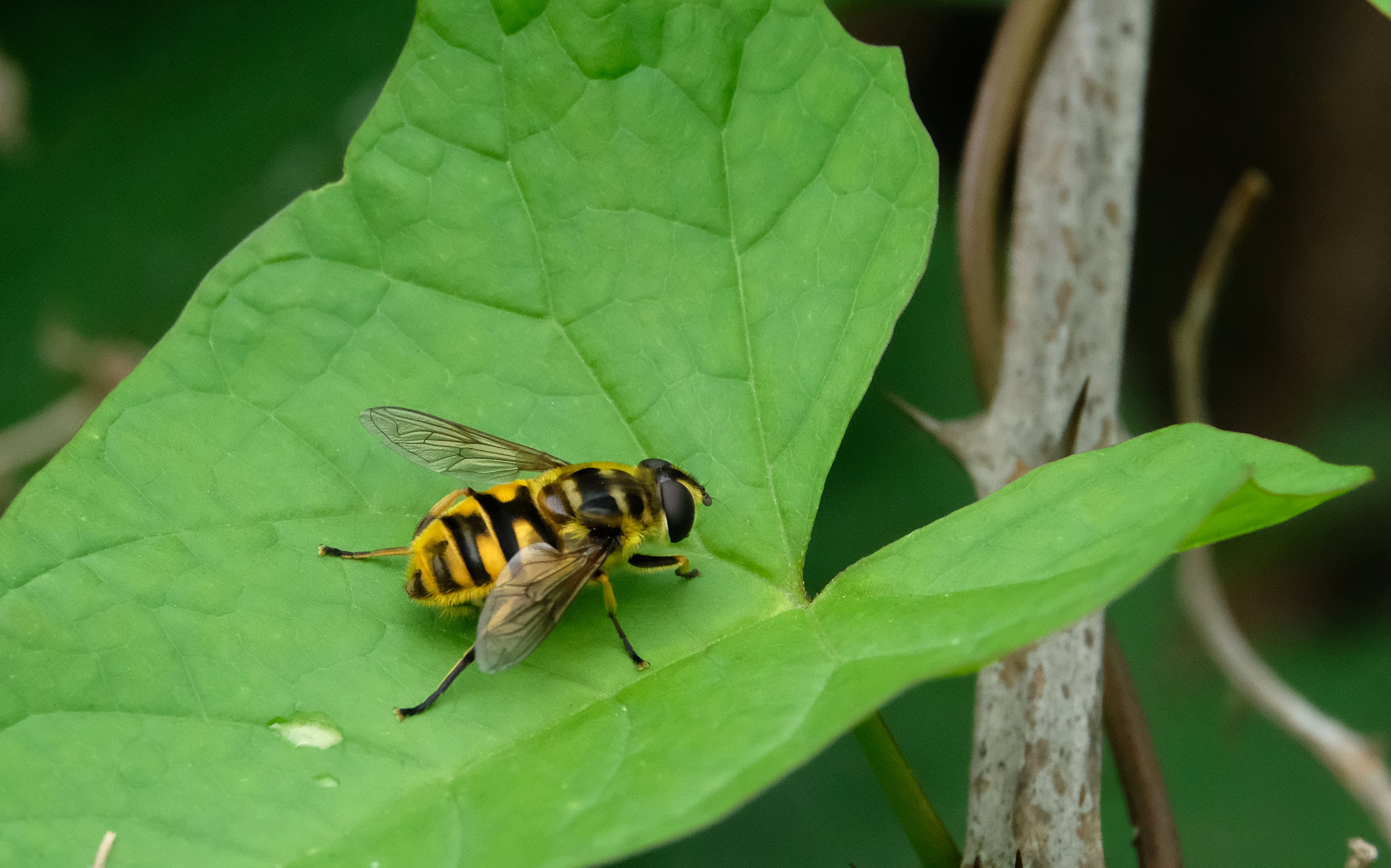 …Note the lines across the thorax in this case.
This is the delightfully named ‘Marmalade Hoverfly’ and she’s distinguished by those pale areas at the end of each segment of her abdomen…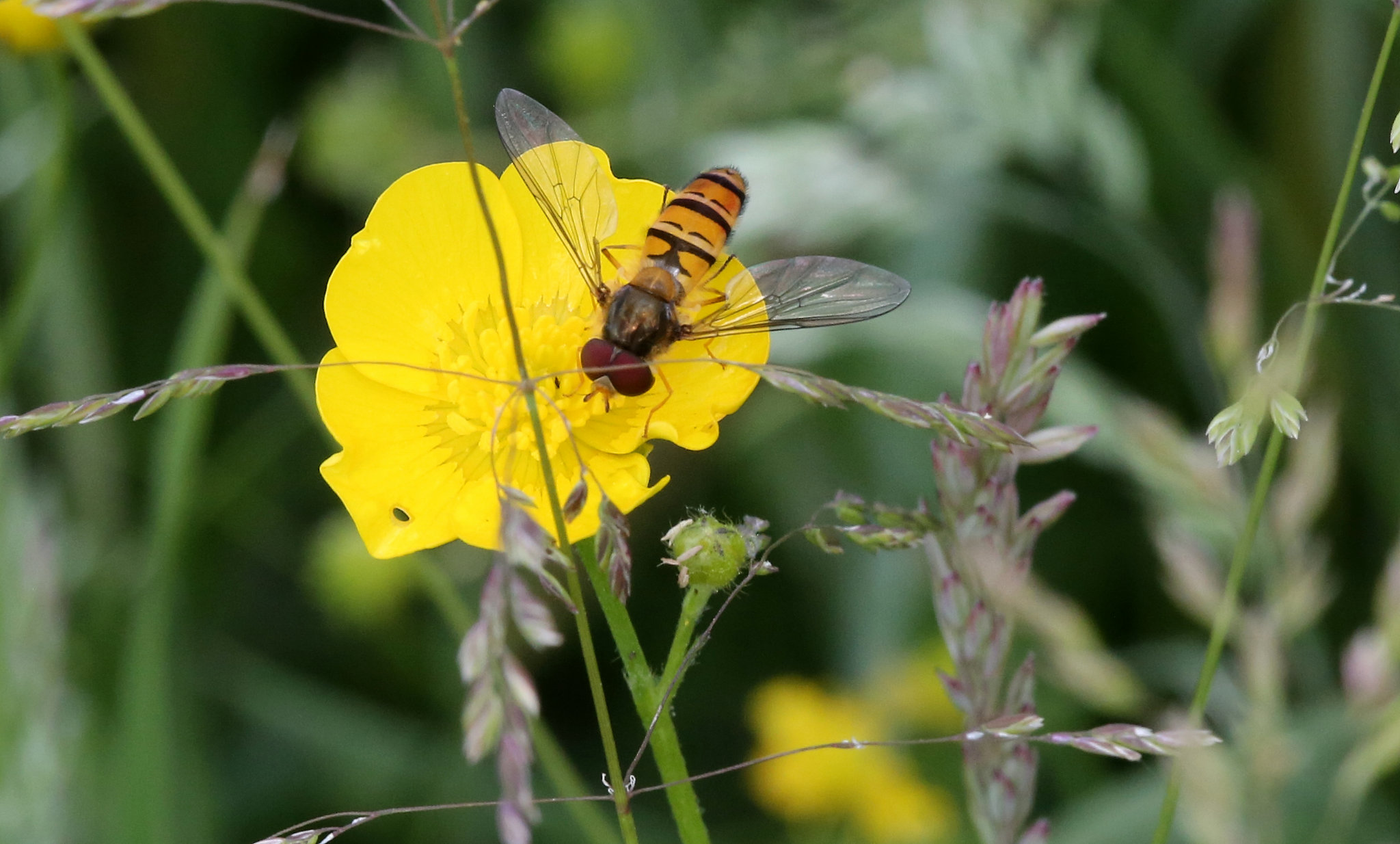 …she’s grabbing a pollen boost from a Meadow Buttercup. Her scientific name is Episyrphus balteatus but I reckon Lady Marmalade will do just fine 😉
Finally, here’s a shot of Eupeodes corollae doing what Hoverflies do superbly well – hovering!..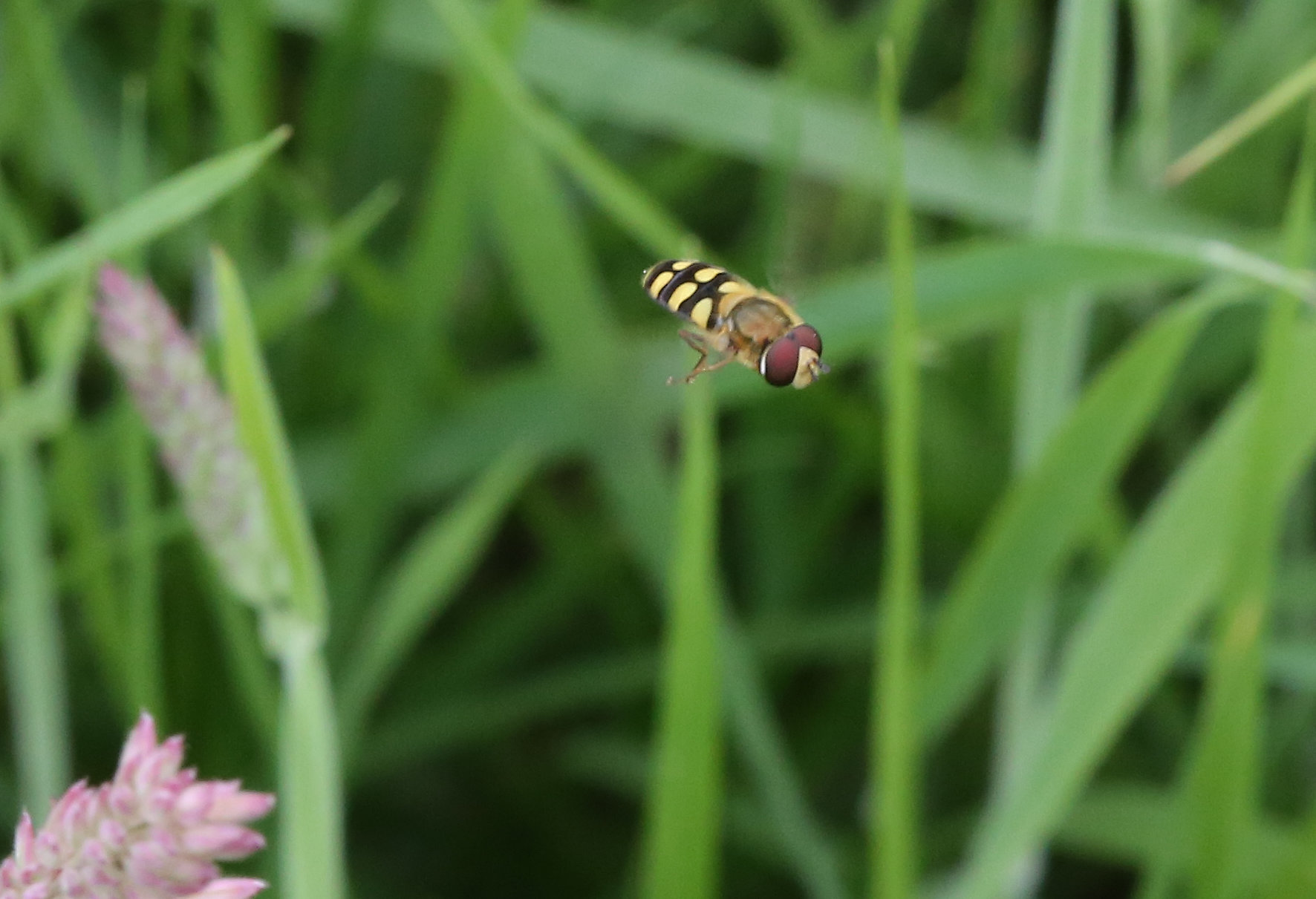 …The speed of the wings is so fast that they don’t even register on my humble camera – Yet the head remains perfectly still at 1/125th of a sec shutter speed 🙂 What an amazing piece of micro engineering! I think that calls for a song…


 2e0mca.uk
Leave a comment